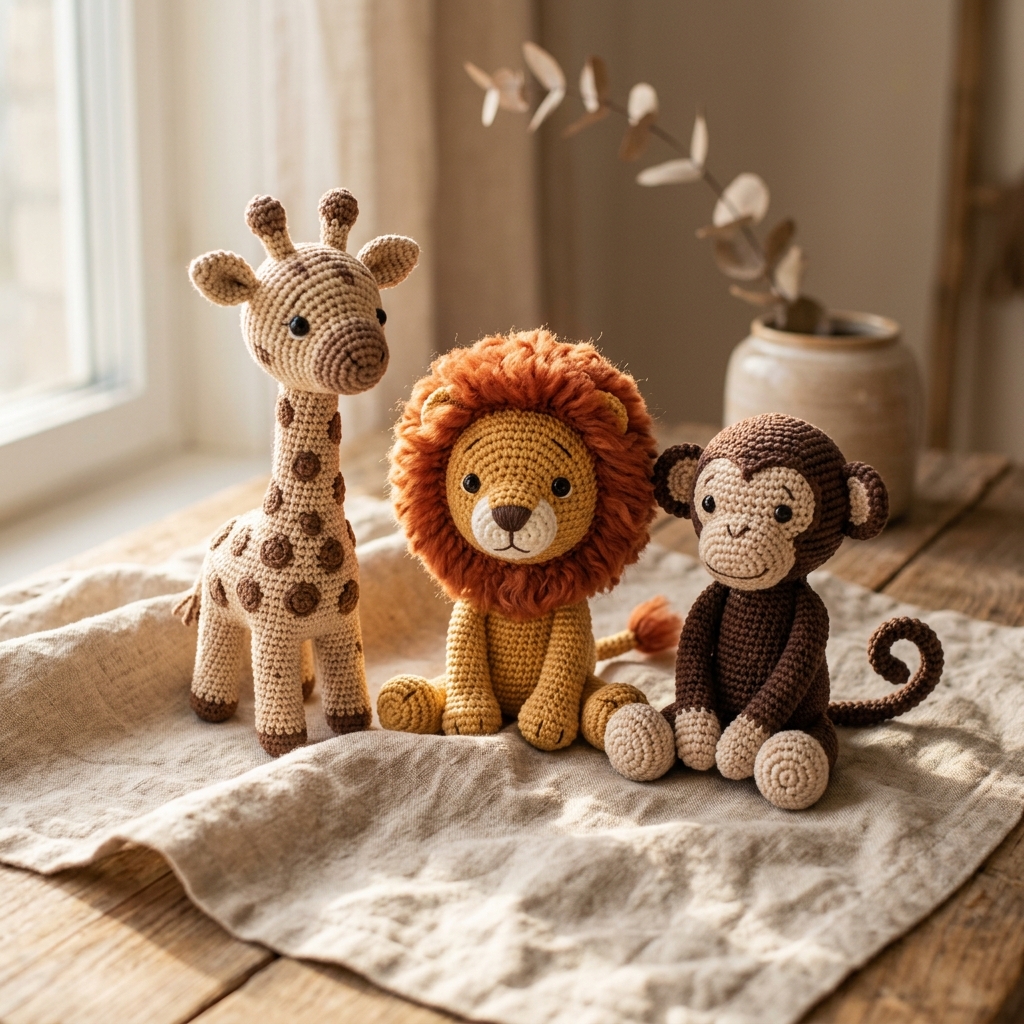
Short answer: yes — a well-made amigurumi can be one of the safest toys in your baby's crib, but only if it ticks a specific set of boxes. A cheap, mass-produced crochet toy with plastic eyes and synthetic filling can be one of the most dangerous. This guide walks you through exactly what separates the two, so you can shop with confidence instead of guesswork.
If you are a new parent, you already know the truth every pediatrician repeats: for the first two to three years, a baby explores the world mouth-first. Every toy is a teething ring, a taste test, and a security blanket rolled into one. That single habit is why "is this toy safe?" is never a paranoid question — it is the right one.
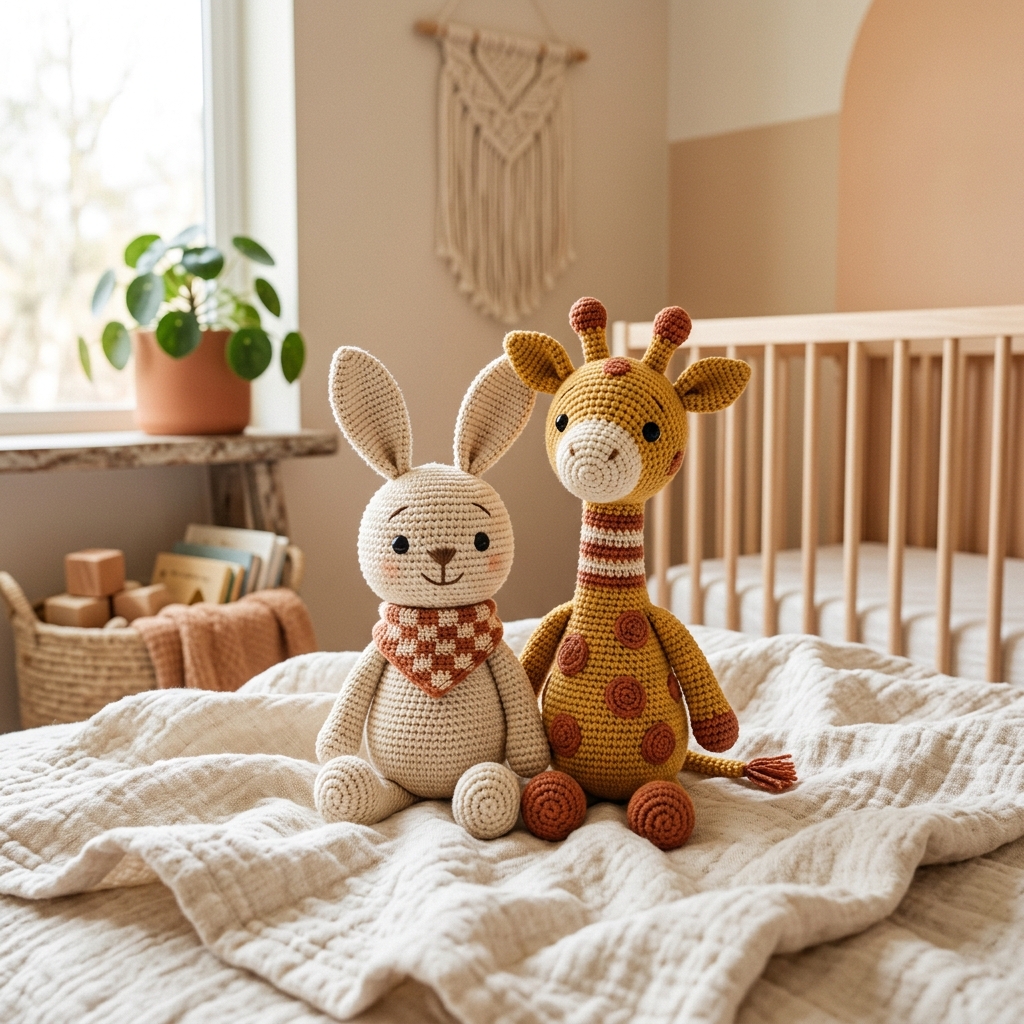
👶 New-parent shortcut: if a toy is soft cotton, has embroidered (not plastic) eyes, and is fully washable, you can relax — it ticks the three big safety boxes.
What "safe" actually means for a baby toy
Toy safety is not one thing — it is three separate risks, and a toy has to pass all three. When people say a toy is "baby-safe," they usually mean it manages every one of these:
- Material safety. Nothing toxic touches your baby's skin or mouth — no harmful dyes, heavy metals, formaldehyde finishes, or off-gassing synthetics.
- Structural safety. No small, hard, or detachable parts that can come loose and become a choking hazard.
- Hygiene safety. The toy can be cleaned thoroughly and repeatedly without falling apart, because a toy that lives in a baby's mouth also collects everything else.
Amigurumi is interesting because it can excel at all three — or fail all three — depending entirely on how, and from what, it was made.
Are handmade amigurumi safe for newborns and infants?
Yes, handmade crochet amigurumi can be safe from birth, and in many ways they are gentler than plastic or electronic toys. They are soft, lightweight, warm to the touch, and free of the batteries, speakers, and rigid edges that fill the toy aisle. There is a reason hospitals and midwives have quietly recommended simple knitted comforters for generations.
But "handmade" is not a safety certificate on its own. A toy crocheted by a hobbyist with leftover acrylic yarn and press-in plastic eyes is handmade too. The safety comes from the choices behind the craft: the fibre, the eyes, the filling, and the finishing. Let's break down each one.
It starts with the yarn: soft cotton vs. synthetic acrylic
The single biggest safety factor in any amigurumi is the yarn, because that is the surface that spends hours against your baby's lips, gums, and cheeks.
Cheap acrylic yarn is petroleum-based plastic spun into fibre. It is inexpensive and colourful, which is exactly why it dominates mass-produced toys. The problem is what makes it cheap: synthetic dyes that can bleed when wet, chemical softeners, and fibres that can irritate sensitive newborn skin or trigger allergic reactions in babies prone to eczema.
Soft cotton yarn sits at the opposite end of the scale: breathable, naturally soft, and gentler on the skin. For a toy that touches a baby's face, the most useful question is simple — what is the yarn, and can the maker tell you plainly? A good seller will happily share exactly which yarn they use.
At Aselovers, this is the part we care about most: we crochet every toy by hand from soft cotton yarn, and we always tell you what it is made from. It is a slower, more expensive way to make a toy — and it is the only way we are willing to put one in a baby's hands.
The eyes: safety eyes vs. embroidered eyes
This is the detail most buyers get wrong, so read this section twice.
Traditional amigurumi often uses plastic "safety eyes" — dome-shaped eyes locked in place with a washer on the back. Despite the reassuring name, "safety eyes" refer to how firmly they are attached, not to whether they are safe for infants. For an older child or a display piece, they are perfectly fine. For a baby under three who will chew, twist, and yank at everything, any hard, small, potentially detachable part is a risk that simply is not worth taking.
For babies, embroidered eyes are the gold standard. Eyes and details stitched directly into the fabric with yarn cannot pop off, cannot be swallowed, and cannot fail. When you are shopping for a newborn or infant, look specifically for amigurumi with embroidered or crocheted features rather than plastic eyes — it is the clearest single signal that a maker designed the toy for a baby, not just for a photo.
💡 Quick tip: Shopping for a baby under three? Look for the words "embroidered eyes" in the listing — it is the fastest way to spot a truly baby-safe amigurumi. 🧸
Stuffing, small parts, and choking hazards
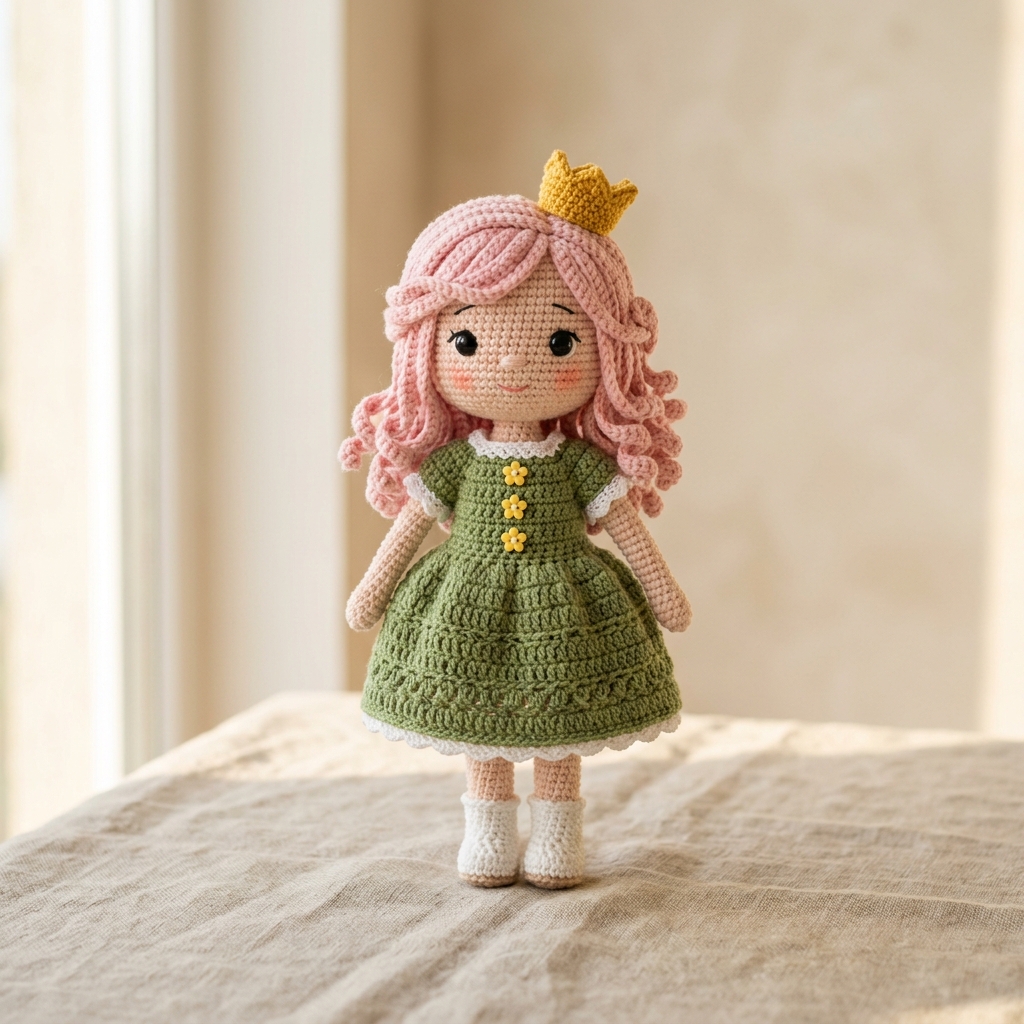
What is inside matters as much as what is outside. Look for toys stuffed with soft polyester fill or cotton stuffing, packed firmly enough that the toy holds its shape and cannot be pulled out through a seam. The seams themselves should be tight and reinforced — a well-finished amigurumi has no gaps a curious finger can widen.
Avoid toys with beaded rattles sewn loosely inside, removable clothing with buttons, or long decorative cords and ribbons longer than about 20 cm, which can pose a strangulation risk. The safest baby amigurumi is essentially one continuous, seamless-feeling piece.
Age-by-age safety guide
Not every amigurumi suits every age. Use this as a quick reference:
- 0–6 months: Only soft, embroidered-eye, single-piece toys with no small parts. Ideal as a crib companion or comforter under supervision.
- 6–18 months: Teething age. Choose densely stuffed, tightly stitched, fully washable toys — this is the phase that tests every seam.
- 18–36 months: Still avoid loose small parts, but toys with simple stitched details are fine for active play.
- 3 years and up: Plastic safety eyes and more detailed accessories become appropriate as the mouthing phase fades.
When in doubt, follow the universal rule: if a part fits through a toilet-paper tube, it is a choking hazard for a child under three.
Keeping amigurumi clean and hygienic
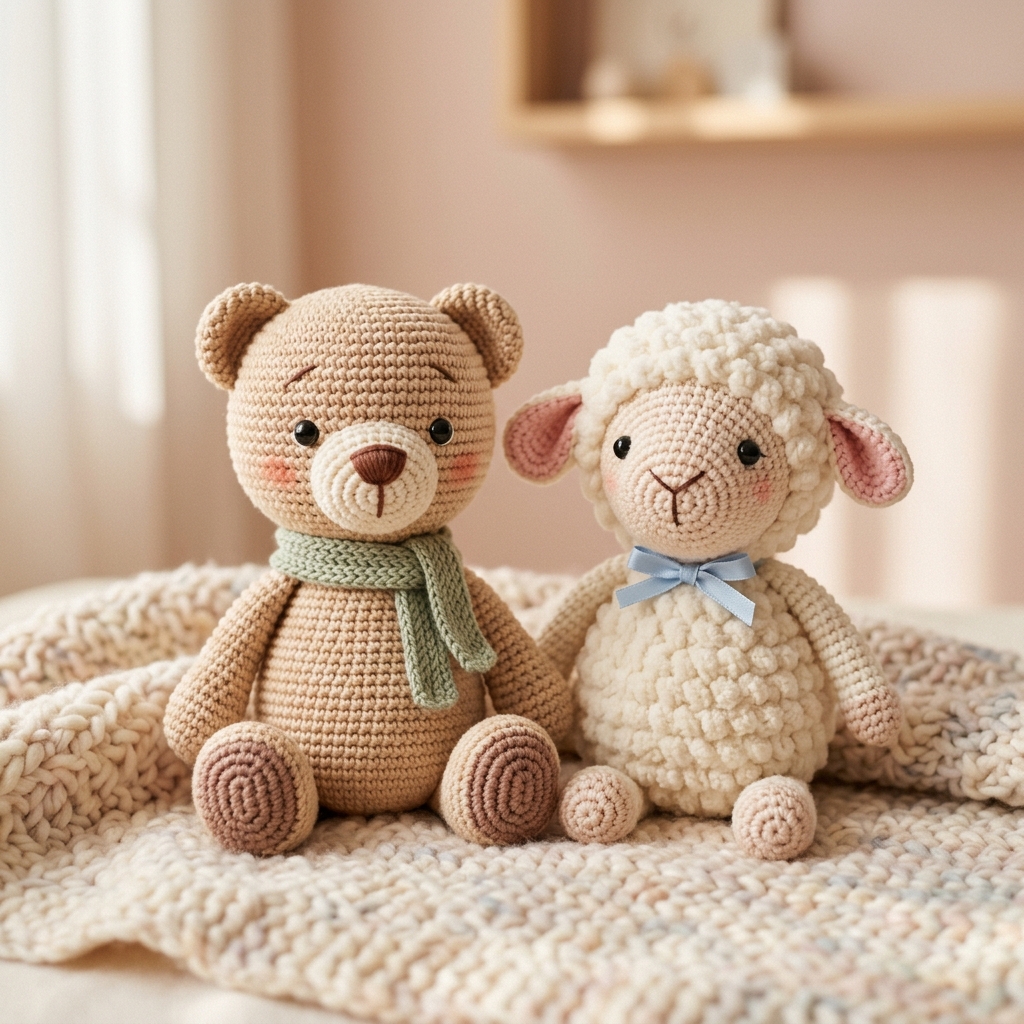
A baby toy is only as safe as it is clean. Cotton amigurumi are usually machine-washable on a gentle, cool cycle inside a laundry bag, and they should be air-dried flat to keep their shape. Because soft cotton is naturally breathable and does not trap odours the way synthetic fibres can, it tends to stay fresher between washes — a small but real advantage during the endless cycle of new-parent laundry.
7 red flags to check before you buy
Before you add any amigurumi to your cart, run through this quick checklist. Walk away if you see:
- No mention of the yarn type at all — a good maker will tell you what they use.
- Plastic safety eyes on a toy marketed for babies under three.
- Suspiciously low prices that only cheap acrylic can explain.
- Loose buttons, beads, ribbons, or removable clothing.
- Gaps at the seams or stuffing that shifts and clumps.
- Strong chemical or "new plastic" smell out of the package.
- No washing instructions or care guidance at all.
Why handmade still beats mass-produced
Factory toys are built to a price. Every cent shaved off the materials multiplies across a hundred thousand units, which is precisely why the cheapest fibres and fastest finishes win on a production line. A handmade amigurumi answers to a different logic: it is made one at a time, by a person who chose the yarn, counted the stitches, and reinforced the seams by hand.
At Aselovers, every piece is crocheted in our Istanbul workshop under hygienic conditions, from soft cotton yarn. That is not a marketing line — it is the reason a parent can hand our toys to a newborn without a second thought. When you buy handmade, you are not just buying a toy; you are buying the judgment of the person who made it.
You can browse our handmade amigurumi collection here to see baby-safe pieces made exactly this way.
Frequently asked questions
Are amigurumi toys safe for newborns?
Yes, provided they are made from soft cotton, use embroidered rather than plastic eyes, contain no small detachable parts, and are fully washable. Always supervise crib use in the first months.
Is acrylic yarn safe for baby toys?
Acrylic is not toxic by default, but low-quality acrylic can carry harsh dyes and chemical softeners and may irritate sensitive skin. soft cotton is the safer, more breathable choice for infants.
Which yarn is safer for amigurumi?
For babies, soft breathable cotton is usually a better choice than synthetic acrylic. What matters most is that the maker can tell you plainly which yarn they used.
Are safety eyes safe for babies?
Despite the name, plastic "safety eyes" describe how firmly they are attached, not their suitability for infants. For children under three, choose amigurumi with embroidered or crocheted eyes instead.
How do I wash an amigurumi toy?
Most cotton amigurumi can be machine-washed on a gentle, cool cycle inside a laundry bag, then air-dried flat. Check the maker's care instructions first.
At what age can a child have amigurumi with plastic eyes?
Generally from three years onwards, once the constant mouthing phase has passed and the choking risk from small parts drops significantly.
The bottom line
Amigurumi can be one of the safest, softest, most loving toys your baby owns — or a hidden hazard — and the difference comes down to a handful of deliberate choices: soft cotton, embroidered eyes, secure stuffing, tight seams, and a maker who cares more about the child than the margin. Know what to look for, and you will never have to wonder again.
Crocheted by hand · Aselovers, Istanbul